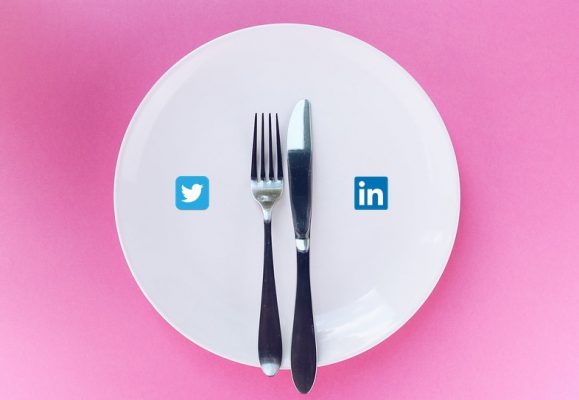
photo credit: quotecatalog.com on Flickr
It’s been just over a year since I gave up Facebook and Instagram and I thought I’d share some observations here about the experience for those considering trying a social media fast after the holidays.
TLDR; It has its pro’s and con’s. I’ve treated it as a 1-yr “elimination diet” experiment. My plan is to reintroduce time-boxed deliberate usage on the weekends while retaining the newsfeed blocker plugins. I’ll explain in depth in this post.
What prompted this experiment?
It’s been a year and a week since I wrote this post and ceased using Facebook and Instagram. If you want the backstory of why read that post. The short version is I had (and still have) concerns that social media may turn out to be the cigarettes of our generation- something we thought that was innocuous at the time that later proves to be cancerous to our mental health. After doing some research and soul searching I decided the only way to figure this out was to withdraw completely from it and see how it felt.
What I did
- Installed the FB Newsfeed eradicator and YouTube Hide Recommended Videos plugins.
- Deleted the Facebook and Instagram apps from my phone.
- Switched from Chrome to Brave browser and enabled active blocking of all Facebook ad tracking.
- Opted out of cross-app tracking on iOS.
- Posted a farewell message on FB/IG.
I didn’t do the full-on Facebook Sepuku for a few reasons:
- Unfortunately I used Facebook as the login for a number of accounts and haven’t fully unraveled all that. It would require migrating each account to use an email address- not terribly difficult, but tedious and time-consuming.
- There are a number of people I met during my travels with whom I’m only connected via FB. I couldn’t bring myself to permanently sever all potential contact with those folks.
- Facebook still has utility to me in the form of participating in various Facebook groups in Lisbon and using the Facebook marketplace for buying and selling items. Also I still receive messages from people via FB messenger where that is the only contact info they have for me.
For these reasons I decided to keep my account and just deliberately maim it using the newsfeed extension so it could only be used for practical purposes and most importantly so that I would not be subject to info manipulated via the algorithm.
Instagram I stopped using entirely and login about once per month to check for DM’s from people who message me on there.
What I experienced
After seeing interviews with the early Facebook founders and watching the movie The Social Dilemma, I was most concerned that daily exposure to Instagram and Facebook algorithms was having deleterious effects on eroding my attention & focus, giving me FOMO and just generally allowing myself to be subconsciously influenced by constant manipulation of selective information exposure. I didn’t know what to expect giving up both platforms cold turkey but here are some of the things I experienced:
The Positives:
- Definite improvement in focus. I’m pretty sure attention is like a muscle and the more you exercise deliberate control the easier it gets. Anecdotally I feel less ADD and more able to concentrate for extended periods whereas this time last year I was prone to distraction. In hard numbers I read 26 books this year which is double my number from last year.
- More presence. My default in a new social setting when I’m around strangers was previously to whip out the phone and start scrolling. Without that crutch I found myself actually talking to strangers and being more present. Also prior to the social media fast when I had IG on my phone, it was muscle memory every time I used the restroom to reach for my phone and start scrolling. It took about a month before that reflex attenuated and the default became to just be at peace doing nothing.
- Less FOMO (fear of missing out). I think even the most zen buddhist monk can be mentally hijacked if exposed to enough imagery of friends doing cool stuff. I don’t care how much mental fortitude you have but no amount of discipline makes you immune to FOMO. The only antidote is by throttling exposure. Indeed this had the desired effect of eliminating the window into everyone else’s lives and resulting in again more presence.
The Negatives
- Isolation: the flip side to the above is that not having this exposure makes you feel less connected. This is an interesting one because when you look at it logically you’re not truly connected with the passive exposure of seeing pics in newsfeeds- it’s purely the feeling of connectedness, even if it’s a false feeling. I can’t deny that I feel less connected and aware of what all my friends are up to without social media even if it’s an absence of a false sense of connection.
- Obscurity. This is a weird one but it’s the other side of the “seeing and being seen” coin. In the same way that I’ve lost visibility into my friends’ lives by failing to consume social media, I’m also not producing surface area in the form of photos and posts that would allow me to occupy mental real estate in the minds of others. As silly as it sounds that periodic confirmation of a like or a comment gives you the affirmation that you still exist in the minds of your friends.
- Loss of spontaneous meetings. Having done Remote Year, Wifi Tribe, Nomad Cruise and a number of different conferences and events, I’m lucky to have a diverse group of friends spread across a number of locations. A good chunk of these people still travel and pass through Lisbon. Failing to be on these platforms means that I’ve missed a handful of people who came through my city this year. You could argue this is like losing something that was unnatural to begin with but I do like seeing when someone’s in town and reaching out to grab coffee and meet up. This is something you lose when you go dark on social media.
Overall assessment
In spite of the negatives I think overall it was a net win and good in the way that doing a full elimination diet then allows you to consciously add back in foods and test your reaction now knowing your baseline without them. Some random observations in no particular order:
- There is so much power in the hands of these companies in how they dictate exposure to information for so many people. I don’t know the silver bullet of what constitutes optimal regulation of the platforms but I tend to err on the side of freedom in these questions and given the incredible gatekeeping positions they hold at the very least I believe there needs to be transparency in how their algorithm’s work, how one’s personal information is sold and used and the right to make informed decisions as a user of these platforms. BTW this is an excellent podcast interview on this topic. I imagine as more research is done we’ll see the equivalent of “surgeon general’s warning labels” on these platforms to at least advise of potential harmful psychological effects as they are better understood.
- Parkinson’s Law at work: My Twitter and LinkedIn usage expanded in absence of Facebook and Instagram. LinkedIn I feel is disposable at this point and its real utility is in the networking features, not the content syndication. Twitter is more useful with 10% gems, 60% noise and 30% filtered news curated by people I like so I don’t have to read mainstream news daily. My “social media fast” wasn’t a complete fast across the board given that I still used LI and Twitter but of the 4 platforms I believe IG & FB were the right two to eliminate.
- Quitting a substance like sugar or alcohol cold turkey is unarguably a good thing. I’m not so sure with social media. It’s become so pervasive and a form of social connective tissue that’s so embedded that outright abstinence carries its own detrimental psychological effects. I think there may be a responsible healthy way to engage with it and I’ll explain that in the last section here.
My plan going forward
As before I’m not intending to kill off either my FB nor Instagram accounts going forward as they still have utility to me and I’m at least aware of the trades data privacy-wise and psychological impact-wise now. My plan instead is to keep the feed blockers in place, to keep the apps off my phone and to continue with the current plan indefinitely with one exception: I’m allowing a 1-hr window of time-boxed usage on the weekend to scroll mindlessly and get a window into my friends’ updates. I’m also giving myself ability to make one post per week during that time. I feel like by having a deliberately time-bound constraint for consumption & production it should mitigate the downsides while still upholding most of the upside of this experiment.
For censorship resistance and immutability I’m looking at using something like Mastadon as an intermediary and having that push via Zapier or IFTTT to Twitter/FB/LinkedIn.
I intend to slowly De-Facebook and De-Google my life in terms of account logins. The convenience of single sign-on is not worth being inextricably coupled to these services so I will be using email logins exclusively going forward and migrating off of single sign-ons for past accounts as I find them.
On my Christmas visit to Phoenix I reached out to a number of friends scheduled lunches, coffees & dinners with about 15 different people. It doesn’t take the excuse of a physical visit though to give you permission to reach out to someone you haven’t talked to in ages and just catch up over the phone. I started scheduling catchup calls before the holidays and I’m hoping to loosely continue slow playing that trend throughout 2022. Weirdly I actually like audio calls more than video calls for the purposes of catching up. It has a different tenor and you can really focus on what the other person is saying when it’s just audio. Time will tell but I plan to keep up that tradition of reaching out to a few people per month.
If you want to do more research on the effects of social media in our lives I listed a few resources in this post and highly encourage watching the documentary The Social Dilemma on Netflix.
What are your thoughts on this stuff?
 was my first exposure to the stoic philosophy and came as a recommendation from my friend